
The Sun City Launchpad: How Fort Bliss Veterans Are Driving El Paso’s Economy
- Tom Handy
- Jul 21
- 2 min read
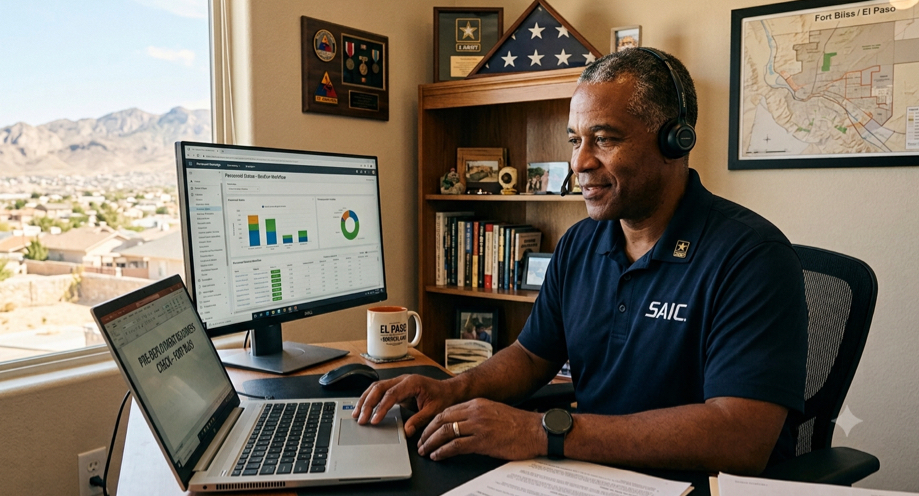
Military retiree image created by Gemini
The defense industrial base in El Paso relies heavily on the steady transition of military personnel from Fort Bliss into defense contracting. Based on available estimates, El Paso is home to a veteran population of approximately 40,000 to 55,000 people, a significant portion of whom are military retirees who chose to stay in the Sun City after their service ended.
Transitioning from active duty to government contracting is a common path for retirees looking to leverage their security clearances and operational experience.
From the Uniform to the Home Office
Making the pivot from the military to the civilian corporate world can be a major cultural shift, especially when it introduces entirely new ways of working. My own transition out of the Army led me directly into a government contracting role with Engility, a firm later acquired by SAIC.
This role marked the official start of my experience working from home, a transition that required adjusting from the structured, physical presence of military leadership to managing operations from a home office 20 to 25 hours a week.
The administrative side of defense contracting involves navigating the strict compliance, data verification, and medical readiness requirements dictated by federal guidelines. For contractors heading into high-risk areas, the pre-deployment phase requires absolute attention to detail to ensure personnel meet every theater-specific requirement before departure.
The Pre-Deployment Line at Fort Bliss
While the day-to-day administrative tasks took place remotely, the operational reality of the job came to life on the ground at Fort Bliss. A main responsibility involved meeting contractors face-to-face as they prepared to deploy overseas.
These meetings served as the final validation checkpoint to ensure personnel were fully prepared, administratively cleared, and equipped for their assignments. After finalizing the paperwork and verifying their readiness on-site, it was common to see those same contractors board transport flights just hours later, heading to various global locations.
Local Veterans Building the Small Business Economy
While corporate defense roles provide a natural landing pad, many service members use the discipline and organizational skills they learned in the military to chart a completely independent path. I have met several Veterans who left the military and started their own business right here in the local community.
The types of businesses they build are diverse, spanning both hands-on technical trades and service-oriented sectors:
Locksmithing & Technical Trades: Providing essential security, commercial hardware installation, and physical asset protection infrastructure across the Borderland.
Restaurants & Hospitality: Launching brick-and-mortar culinary concepts that enrich the local food culture and create service-sector jobs.
Teaching & Educational Services: Translating institutional training expertise into private corporate consulting, local tutoring networks, or trade instruction.
Insurance: Transitioning into the life and property insurance field allows veterans to apply their strategic risk-management training while benefiting from structural incentives
For military retirees living in the Borderland, whether navigating the multi-billion-dollar government contracting space or building a neighborhood storefront, El Paso remains a practical, supportive landscape for civilian career reinvention.


Comments